Half an hour after your massage you're on your way home. Your body feels pleasantly heavy and your mind is finally quiet. And right then a dull pressure sets in at your temples. An odd reward for an hour of care, isn't it? A massage was supposed to dissolve a headache, not deliver one.
First, the reassuring part: there's almost never anything serious behind it. It's a common, passing reaction that clears up on its own within a few hours, often much sooner. And it's certainly not any "flushing out of toxins". That idea is a myth that has outstayed its welcome. What's more interesting is something else. Under the single label "headache after a massage" hide four quite different headaches, each with its own cause. And once you know which one is yours, you also know exactly how to ease it.
What we lump together as a headache after a massage tends to have four different triggers: released tension in the neck and jaw, a lack of fluids, a skipped morning coffee, and an awkward neck position on the table. Each shows up with different signs and each is fixed differently.
A severe, sudden or truly unusual headache does not belong here, though. That one no longer relates to the massage and is a matter for a doctor.
Not every headache has the same source
Most people picture a single thing behind a post-massage headache. In reality it's four quite different processes. They only happen to announce themselves the same way, as pressure in the head. They differ in where exactly it presses, when it arrives and what reliably chases it away. And none of them means something went wrong.
- Released tension in the neck and jaw. The neck, temples and jaw carry tightness for days without your noticing. Plenty of people also unknowingly clench their teeth at night. When those muscles and trigger points finally let go under the therapist's hands, the head can briefly protest. Much as stiff back muscles first "speak up" after long sitting, before they loosen. This ache is dull, sits at the back of the head and temples, and turns up during the massage or soon after. It's exactly what a neck and cervical spine massage works on.
- A lack of fluids. Few people arrive perfectly hydrated. Be even slightly dehydrated and a small trigger is enough to stir the head into a dull, diffuse ache that's "everywhere and nowhere". That's why a plain glass of water before and after your massage is one of the most effective tricks of all.
- A skipped morning coffee, the quiet culprit everyone forgets. This one earns its own paragraph, because almost nobody suspects it. You book a massage for the morning or midday and in the rush you skip your usual cup or two. A body used to caffeine then starts to protest within a few hours. The headache was coming either way, but you happen to be lying in complete calm. So you first notice it fully on the table. The massage then takes the blame for something the missed coffee set off. You'll recognise it because it presses more at the front or across the whole head, tends to throb, and eases within about an hour of finally having your coffee.
- Your neck's position on the table. Lying for a while with your face in the cradle or your head turned to one side can irritate the cervical spine and the muscles around it. Tension from the neck then "spills over" into a dull ache and sometimes mild dizziness. It's often one-sided and pulls upward from the neck.
Don't confuse one thing with another, though. A headache isn't the same as the muscle soreness you sometimes feel in the back and legs after a deeper massage. We cover that separately in Muscle soreness after a massage. And if you're curious about the whole family of harmless reactions, from fatigue to chills, the overview Reactions after a massage gathers them up.
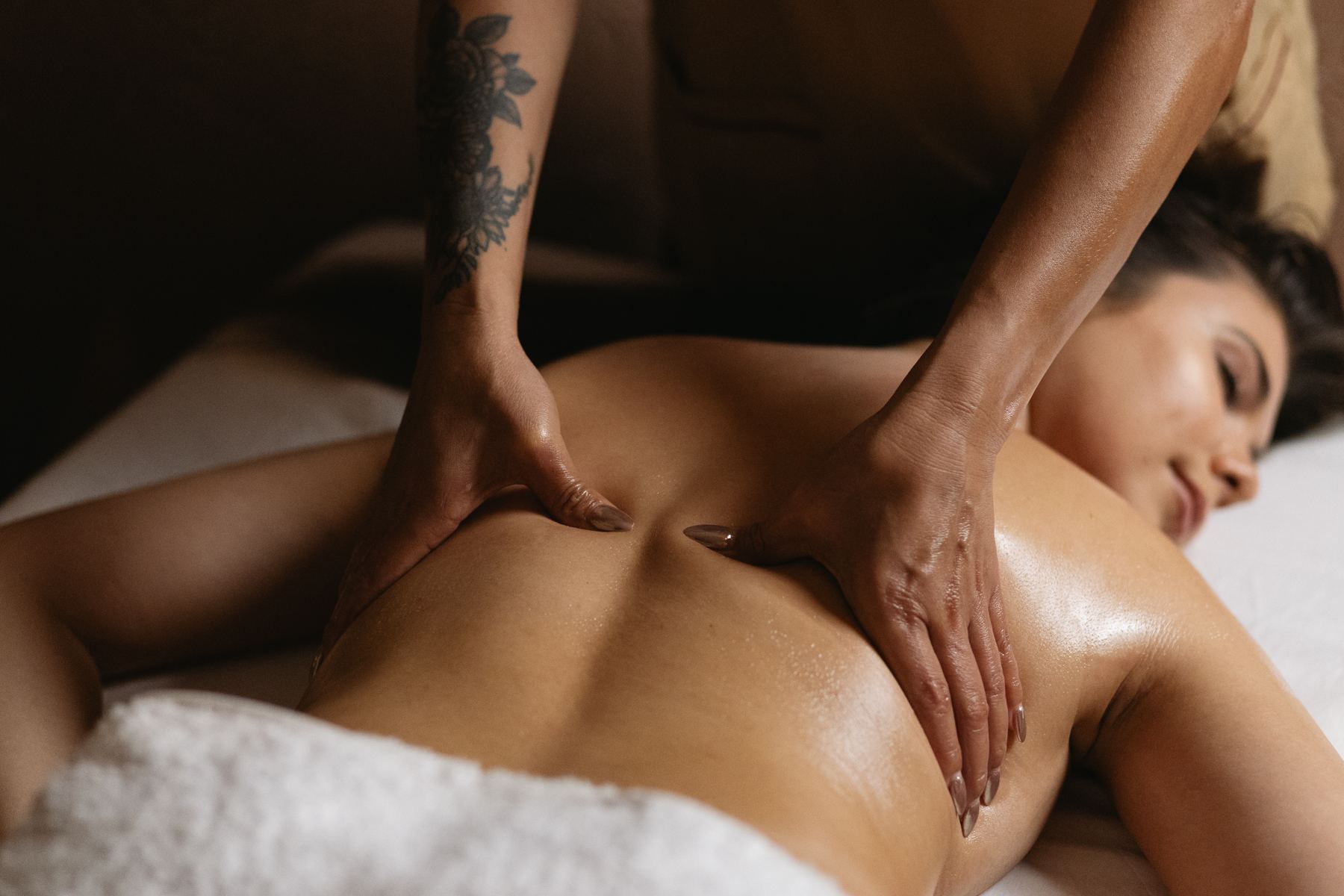
Which one is most likely yours
It may sound involved, but telling them apart takes a moment. Just ask yourself three questions. The answer comes with the fix that works fastest:
- Where does it press? At the front, throbbing, across the whole head → points to coffee. Dull, at the back of the head and neck → released tension. One-sided, pulling up from the neck → position. Faint and "everywhere" → fluids.
- What did (or didn't) you do today? A skipped coffee, an empty stomach, too little to drink since morning, a broken night. Each culprit leaves its own fingerprint. Trace the day back and the headache usually confesses on its own.
- What settles it within half an hour? A glass of water for dehydration, a small snack if you haven't eaten in a while, a cup of coffee for the caffeine one, and warmth with a gentle neck stretch for tension and position. If a specific step works quickly, you've also confirmed the cause.
Whatever it turns out to be, the same basics help: calm and dim light instead of a bright screen your tired eyes would only pay for. Lie down for a moment, lower the lights and give your body ten or fifteen minutes. Most of these headaches are on their way out by then.
How to sidestep it next time
You can't rule it out completely, and there's no need to fear it. It's harmless. But once you know its four triggers, you can trip them up in advance:
- Drink before and after. A hydrated body takes the release far more calmly. For what to bring and how to arrive prepared, see What to bring to a massage.
- Don't come on a completely empty stomach. A light meal an hour or two beforehand keeps your blood sugar steady and spares you both the shakiness and the pressure in your head.
- Speak up if the position doesn't suit you. An uncomfortable neck, a hard face cradle or too much pressure on the neck, just say so. We can adjust the position, head support and intensity at any point during the massage. Your comfort is part of it.
- Leave time to come round. Jumping from warm bliss straight into the rush and back to a screen is exactly when a headache strikes. What to avoid after a massage we've written up in a separate article.
When it's no longer a reaction to the massage
The line is thankfully clear. All four headaches above are mild, ease after one simple step, and are gone by evening. A different headache, though, has nothing to do with the massage and belongs in a doctor's hands. You'll know it by a few clear signals.
- it strikes suddenly and severely like a thunderclap, or is the worst you've ever felt,
- it is severe or migraine-like, or reliably returns after every massage,
- it comes with disturbed vision or speech, weakness or tingling in the limbs, a stiff neck with fever, or vomiting,
- it appears after a head or neck injury, or keeps building despite all your care.
In those cases your body isn't reacting to the massage but flagging something else. The only sensible address is then a doctor. A massage is care, rest and relief. It will never stand in for an examination or a diagnosis. And if you actually landed here because a massage helps your headaches, you're right. We explain exactly how in Massage for headaches.
Key takeaways
- One label, four different headaches. Released tension in the neck and jaw, too little fluid, a skipped coffee and neck position on the table.
- Tell them apart by where it presses. Front and throbbing means coffee, dull at the back means tension, one-sided from the neck means position, faint "everywhere" means fluids.
- The fastest relief matches the cause. A glass of water, a small snack, a cup of coffee, or warmth with a gentle neck stretch.
- Prevention is simple. Don't skip your usual coffee, arrive hydrated and not on a completely empty stomach, and speak up for a comfier position.
- A doctor only rarely. For a sudden, severe or truly unusual headache, or when serious symptoms come with it.
Release the tension before it reaches your head
The Anti-stress Massage of the head and neck goes straight for the tight muscles of the neck and jaw that pressure in the head most often comes from. You'll leave lighter, with a quieter mind.