Your therapist quietly says you're done. You roll onto your back and prop yourself up on your elbows. And right then your stomach speaks up. It isn't pain. It's more a mild swaying, as if you were standing on the deck of a boat. A wish to close your eyes for a moment and not move. A strange goodbye after an hour of bliss, isn't it?
Let us reassure you right away. Nausea after a massage is rare, and there is almost always ordinary body mechanics behind it, nothing serious. Certainly no "flushing of toxins." The interesting part is that the massage itself does not set the feeling off. What sets it off is the moment you get up.
That swaying in your stomach is most often a short blood-pressure reaction. After deep relaxation your pressure runs a second late the moment you sit up. Add falling blood sugar on an empty stomach and an hour spent lying face-down.
It is almost always a mild "I feel off," not vomiting. It clears within a few minutes sitting down, with air and a sip of something sweet. Only take notice of vomiting, fainting, a fever or chest pain, which no longer has anything to do with the massage.
Feeling queasy isn't vomiting
First, let's be clear what we're talking about. The word "nausea" mixes two rather different things.
What people feel after a massage is almost always the milder one. A light swaying, a little water in the mouth, a wish to sit down and not breathe too deeply for a moment. Unpleasant, but harmless and quick to pass.
A real urge to be sick is something else. It does not belong to a calm response to a massage and usually has a different cause. That difference between "I feel a bit off" and "I have to be sick" is the line that tells you whether to simply wait it out or to take notice.
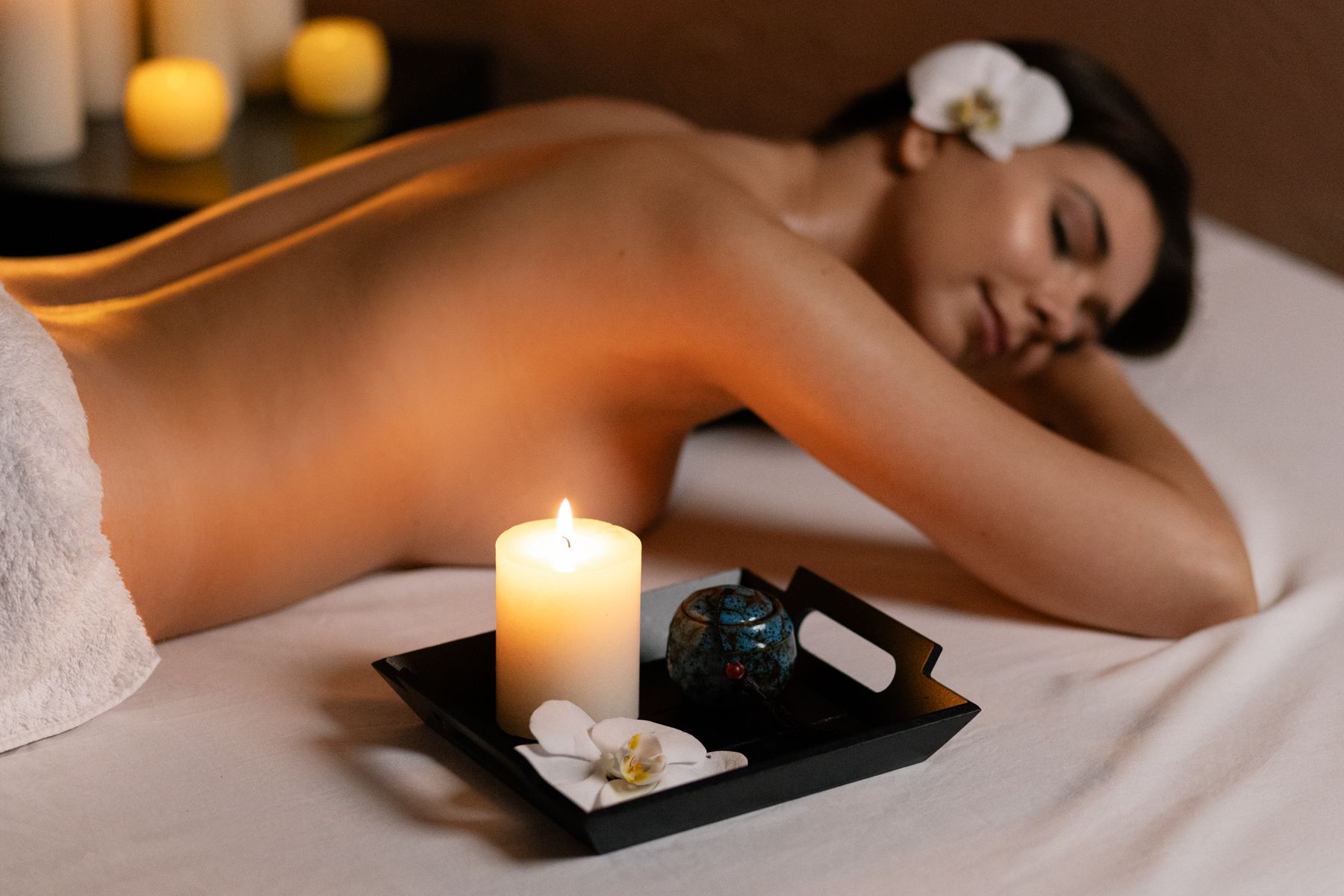
The one second you get up
The key to post-massage nausea hides in a single moment: the shift from lying down to sitting up.
When you're lying flat, your heart doesn't have to push blood up against gravity to your head. After an hour of relaxation your blood vessels have also widened and your pressure has settled nice and low. Your body is thoroughly at ease.
Then you sit up. Gravity pulls some of your blood down into your legs and belly. Normally your body corrects this within a single heartbeat: pressure sensors in the arteries of your neck, called baroreceptors, speed up the heart and tighten the vessels. After deep relaxation they react a moment later. For two or three seconds your brain sits on "low pressure." That is what you feel as a swimming head and a wave of nausea.
An empty stomach and an hour face-down
The second piece of the puzzle is purely about the stomach. It starts long before you ever lie down.
- Falling blood sugar. If you arrive on an empty stomach, the hour in which your body switches to rest can let your blood sugar drop lower than is comfortable. The answer is weakness, a cold sweat and, yes, queasiness too. It is the same feeling as when you haven't eaten for ages and your knees suddenly go soft. This state is a close relative of weakness after a massage.
- An hour lying face-down. You spend much of the massage face down, your head in the cradle of the table and your belly gently pressed against the surface. That mild but long-lasting pressure on the stomach area can, in some people, bring on a little swaying all by itself — one that only announces itself once you turn over and sit up. Nothing is wrong; everything inside is simply settling back where it belongs.
- A nervous system in low gear. Deep relaxation dials your whole body down into rest mode: it slows the pulse, relaxes digestion, redistributes blood flow. In more sensitive types, that abrupt switch to "off" can briefly unsettle the stomach as well.
Nausea doesn't come to a massage alone. In the same family of mild reactions you'll find fatigue or chills. For the full map of what's normal and what isn't, see our overview Reactions after a massage.
What to do right now
The fix needs nothing clever. Just give the body back the three things it's missing at that moment: calm, air and a pinch of sugar.
- Stay down a little longer. Before you get to your feet, sit or lie for a bit. Most queasiness eases before you've finished getting dressed.
- Breathe some fresh air. An open window or a few breaths by the door works wonders on the swaying. A hot, stuffy room only feeds it.
- Sip slowly. Water or herbal tea in small sips settles the stomach better than one big gulp.
- Have something small and sweet. A biscuit, a piece of fruit, a few nuts — they steady the dropped sugar. If you came on an empty stomach, this is usually the main relief.
- Get up in two stages. Sit first, wait two or three seconds, then stand. That gives the baroreceptors exactly the time we talked about above.
At our salon no one hurries you out afterwards. Stay seated as long as you like, ask for a glass of water or a cup of tea, and get up only when you truly want to.
So it doesn't happen next time
Most of the prevention happens before you even lie down on the table:
- Don't come on an empty stomach — but don't overeat either. A light snack about an hour beforehand is the ideal: enough to keep your sugar up, not so much that a full stomach weighs on you. More in How to prepare for a massage.
- Arrive hydrated. A glass of water before your massage and one after does more than you'd think. For what else is worth bringing, see What to bring to a massage.
- Ask for a change. We can adjust the pressure, intensity and your position on the table at any time — for instance propping the chest so your belly isn't so compressed. Your comfort is part of the massage, not an interruption.
- Plan a soft landing. Jumping from warm bliss straight into a rush is exactly when queasiness strikes. What to avoid after a massage, we've gathered here.
When it's no longer the massage
The line is thankfully clear. Ordinary post-massage nausea is mild, short, and disappears with air and a sip of water. See a doctor, though, if one of these signals appears.
- the swaying turns into real vomiting that won't ease,
- fainting, severe dizziness or a cold sweat comes with it,
- it's accompanied by a fever and an aching body (more likely a virus that just happened to start that day than the massage),
- the nausea drags on for hours or keeps coming back,
- chest pain, breathlessness or a severe headache appears.
These signals no longer tell the story of relaxing after a massage. They speak of something else and belong with a doctor, not in a relaxation room. A massage can care for you and bring relief beautifully. It is no substitute for an examination or a diagnosis.
Key takeaways
- Nausea is set off by sitting up, not the massage itself. Your pressure lags a second after relaxing.
- The most common triggers: an empty stomach, too little fluid and an hour spent lying face-down.
- Immediate help is calm, air, small sips and something sweet, plus getting up in two stages.
- Prevention starts before the massage: a light snack, arrive hydrated and ask for a comfier position.
- See a doctor only for vomiting, fainting, a fever or chest pain.
A massage you get up from calmly
Tell us what you're sensitive to — we'll prop, slow down and fine-tune the pressure. And once the massage is over, we'll let you come round in peace over a cup of herbal tea.
Free cancellation up to 24 h before · pay online or on arrival