Standing at the salon door, your confirmed booking for a first Thai massage in hand, your head full of questions. Do I get undressed? Will it hurt? What if I don't know how to lie down or when to breathe? That little uncertainty about the unknown is usually the only thing that holds people back before a first visit. Yet all it takes is knowing what's coming, and the tension drops before you've even crossed the threshold.
So we'll walk you through the whole thing. From the moment you ring the bell to the moment you step back outside feeling wonderfully light. Step by step, no mysteries. You can focus on the one thing that matters: an hour that belongs entirely to you.
Arrive a little early. Talk through your wishes and your health over a cup of tea, change into loose clothing and let yourself be guided through a blend of pressure and gentle stretching along the traditional "sen" lines.
You control the pressure throughout with the words SOFT and STRONG. It closes with a calming finish, tea and a moment to come back to yourself.
Arrival, welcome and a few questions
Ideally arrive 10–15 minutes before your start time. It isn't a formality. It's room to take your shoes off, slow down and switch from the bustle of Prague into a very different tempo. Calm, soft light and a cup of tea will greet you. Then comes a short, friendly consultation. No three-page questionnaire, just a few questions so your therapist can tailor the massage to you.
- What you're hoping for. Pure relaxation, release of one specific stiff area, or simply an hour with no one reaching for you with a phone?
- Where to focus. A neck stiff from the computer, legs after sport, a lower back after long sitting. Say so right at the start.
- How you are health-wise. Injuries, pregnancy, circulatory issues, high blood pressure or recent surgery. With some conditions it's wiser to postpone. We cover what massage isn't suited to in our article on contraindications for massage.
Don't be shy about speaking openly. The more your therapist knows about what you're bringing, the more precisely she can shape the hour. If you'd like to think the preparation through in advance, our article How to prepare for a massage helps.
What you wear and the setting
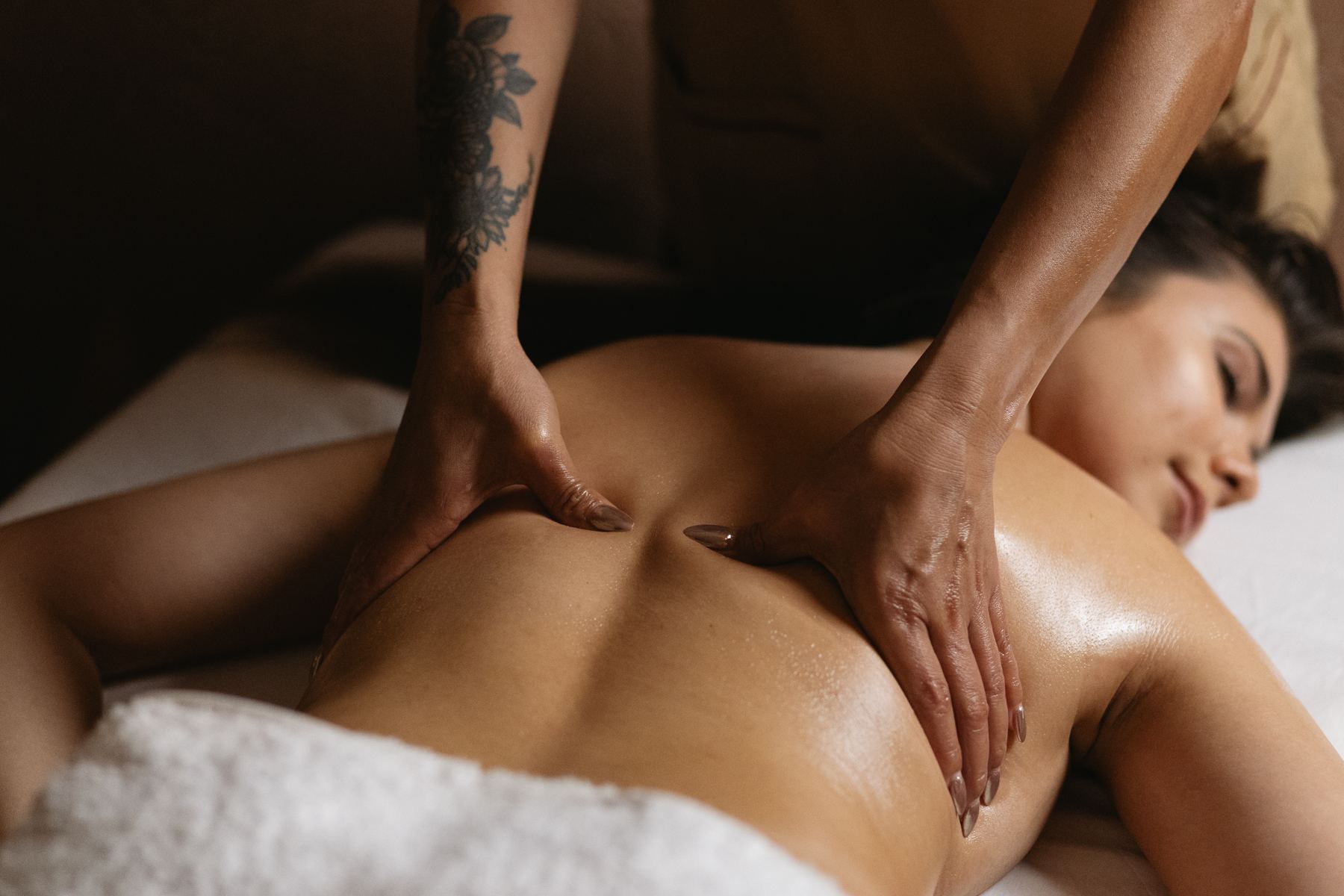
This is where the first worries usually melt away. For a traditional Thai massage you stay dressed and no oil is used. You simply change into loose, comfortable clothing you can move in, a little like pyjamas for yoga. Nothing suitable with you? We're happy to lend you clean clothes, so don't give it a second thought.
The massage takes place in a quiet, pleasantly warm room. Often on a soft mat on the floor or on a wide bed, not on a narrow table like a classic massage. The light is dimmed, soft music plays and your phone stays outside the door. Want to be sure what to bring and how to arrive prepared? We have a whole guide: What to bring to a massage.
How the massage itself unfolds
Don't expect one muscle kneaded in one spot. A Thai massage is more of a slow, flowing dance that leads your body from one position into the next. It typically works its way up from the feet, so the body wakes up gradually. The whole has a rhythm: press, release, breathe, next position.
- Warming up. The therapist begins with calm pressure along the legs and back, preparing the muscles and letting you settle into stillness.
- Working with pressure. Then comes rhythmic, flowing pressure with the palms, thumbs, and sometimes elbows, knees or feet on specific points and muscle lines.
- Stretching. The most distinctive part — the therapist gently guides you into yoga-like stretches you couldn't reach on your own, releasing tension and freeing the joints.
- Winding down. The massage closes with gentle work on the neck, head and hands, after which body and mind can finally exhale.
It all flows without tugging or rushing. Your only job is to let yourself be guided and to breathe. The therapist takes care of the rest.
Techniques: pressure, stretching and the "sen" lines
Three things make a Thai massage what it is. Precise pressure with the palms and thumbs, which releases stiff muscles. Assisted stretching, which leaves you feeling more supple and mobile. And work along the so-called "sen" lines, a network of pathways along which, according to a thousand-year Thai tradition, life energy moves through the body. Think of it as a beautiful cultural framework that gives the massage its rhythm and order, not as a medical treatment. The aim is deep relief and wellbeing, not a diagnosis.
It's precisely the stretching and the dry, clothed format that set traditional Thai massage apart from a classic oil massage. We unpack the differences in Thai vs classic massage, and you'll find the wider context in our guide What is Thai massage. If you prefer a soft, warming touch with oil and flowing strokes, reach for a Thai oil massage. For the authentic experience unchanged, choose a traditional Thai massage.
Ask for the pressure that suits you
Here's the single most important sentence in this article: you control the pressure, not the therapist. A Thai massage can be deep and intense, but it should never tip over into sharp pain. Two words that therapists understand the world over are all you need. "SOFT" when you'd like more gentleness, "STRONG" when you're after a firmer press.
- Mention the small things too. Feeling cold, an awkward position, a tender spot. All of it can be adjusted in a second.
- A mild pull is fine. In the stretches it's normal to feel a pleasant tension. Sharp, stabbing pain is not, and that's exactly the moment for "SOFT".
The finish, winding down and afterwards
The final touches tend to be the gentlest. There's no rush afterwards. You get time to sit up, come back into your body and calmly sip a warm tea. In our salon you can stay as long as you need. A sudden leap back into the bustle is the one thing that could spoil that sense of lightness. Treat yourself to a few small things:
- Drink water. You'll rehydrate and let the massage settle nicely.
- Ease off the pace. Skip a hard workout or heavy labour that day, your body is enjoying the release.
- Stretch gently. You'll keep the newfound suppleness a little longer.
You'll find detailed guidance on what helps afterwards in our article What to do after a Thai massage. And should your body respond to a first visit with slight stiffness, much like after exercise, that's perfectly common and usually eases within a day. Which reactions are normal and when to take notice is neatly summed up in Reactions after a massage.
Key takeaways
- Arrive 10–15 minutes early. Take your shoes off, slow down and ease through a short consultation.
- You stay dressed, no oil. Just loose clothing, which we're happy to lend if you need it.
- Pressure, stretching and "sen" lines. The massage flows up from the feet, without rushing.
- You control the pressure. With the words SOFT and STRONG, and speak up right away, not after.
- Don't rush afterwards. Drink water, ease off the pace and stretch gently.
Book your first Thai massage
Now you know exactly what to expect. Experienced therapists, a calm setting in the centre of Prague and a welcome tea with every massage.
Free cancellation up to 24 h before · pay online or on arrival