Close your eyes for a moment and picture hands kneading tired shoulders. That motion is older than writing. Older than the wheel. Older than most of the gods people have ever prayed to. The touch that soothes and relieves was discovered long before we learned to write anything down. After all, we still instinctively rub a bumped elbow and stroke a crying child. At heart, massage is simply that ancient reflex, refined over thousands of years into an art.
And the journey from instinct to art is a gripping story. It is full of temples, monks, Olympic athletes and physicians. Let's walk it together. From Egyptian tombs through Indian healers and Chinese masters all the way to a treatment table in central Prague, where the story quietly continues today.
Massage is one of the oldest forms of body care. The evidence goes back more than 4,000 years, and it arose independently in Egypt, India, China and the ancient Mediterranean.
Thai massage was born from the meeting of the Indian and Chinese traditions in Buddhist temples. In 2019 UNESCO added it to the list of humanity's intangible cultural heritage. What you experience on the table today has come a remarkably long way.
A touch as old as civilisation itself
There is one curious thing about the history of massage: it has no single birthplace. It appears independently in cultures that often didn't even know of one another. It is as if humankind arrived at the same idea in several corners of the world at once. And that alone hints at how natural and deeply rooted the need for touch really is.
- Egypt. On the wall of the physician Ankhmahor's tomb at Saqqara, roughly 4,300 years old, a scene survives of one figure kneading another's hands and feet. It is one of the oldest pictorial records of massage anywhere in the world.
- China. Traditional Chinese medicine developed acupressure, the stimulation of precise points on the body. In its view, this helped the life energy qi flow more freely. The work with pressure points in Thai massage draws on that same thinking to this day.
- India. Massage is a firm part of Ayurveda, one of the oldest systems of body care. In its philosophy it was meant to support the balance of body and mind, and oil massages belonged to the daily ritual. (We treat these ancient ideas today as cultural heritage, not as medical advice.)
- Greece and Rome. Hippocrates, the "father of medicine", wrote as early as the 5th century BC that a physician must be skilled in "rubbing". In Rome, massage was inseparable from the baths and from the training of gladiators and athletes.
The legend of the physician who tended the Buddha
Say "Thai massage" to a Thai and one name comes to mind: Shivago Komarpaj (in the Pali texts, Jivaka Kumar Bhaccha). Tradition holds he was a renowned physician who lived more than 2,500 years ago. A personal healer to an Indian king and to the Buddha himself. Thai therapists still revere him as the "father of medicine", and many quietly recite a short prayer in his honour before a treatment.
Whether he was a real person or a figure wrapped in legend, his legacy paved the road along which the teaching travelled onward. With Buddhism it made its way from India to Thailand. For centuries it was passed down orally, from master to pupil, in the calm of Buddhist temples. Monks cultivated it as part of caring for both body and spirit.
The most famous centre became the Bangkok temple of Wat Pho, nicknamed the first Thai university. And in 2019 UNESCO inscribed Thai massage (nuad thai) on the list of humanity's intangible cultural heritage, among the treasures worth protecting. What today's Thai massage actually involves is something we unpack in our article What is Thai massage.
How touch reached the West
In medieval Europe, massage largely vanished from the sight of scholars and survived mainly in folk healing. Old wives' remedies and the healing hands of village bonesetters. It was "rediscovered" only at the start of the 19th century, thanks to one Swede.
Pehr Henrik Ling assembled a system of movements and strokes from which so-called Swedish massage was born. It is the basis of what most people in the West now picture as a classic massage. Effleurage, kneading and tapping were given names and order. Massage began to be studied and taught systematically. It thus moved from temples and baths into clinics and rehabilitation. How Swedish massage differs from the Thai kind is something we describe in our article Thai vs. classic massage.
From healing to a haven of calm
The twentieth century gave massage two faces. The first is clinical. Physiotherapy and rehabilitation, where touch helps the body recover after injury or surgery. The second, the most visible today, is wellness.
With the rise of spas and wellness, massage became above all a way to slow down and breathe. A counterweight to a hurried age. It is no longer about treating illness, but about care, calm and a moment just for yourself. How many different forms massage takes today is summed up in our article Types of massage. And what Thai massage in particular does for body and mind, you'll find in The effects of Thai massage.
A piece of that history within reach in Prague
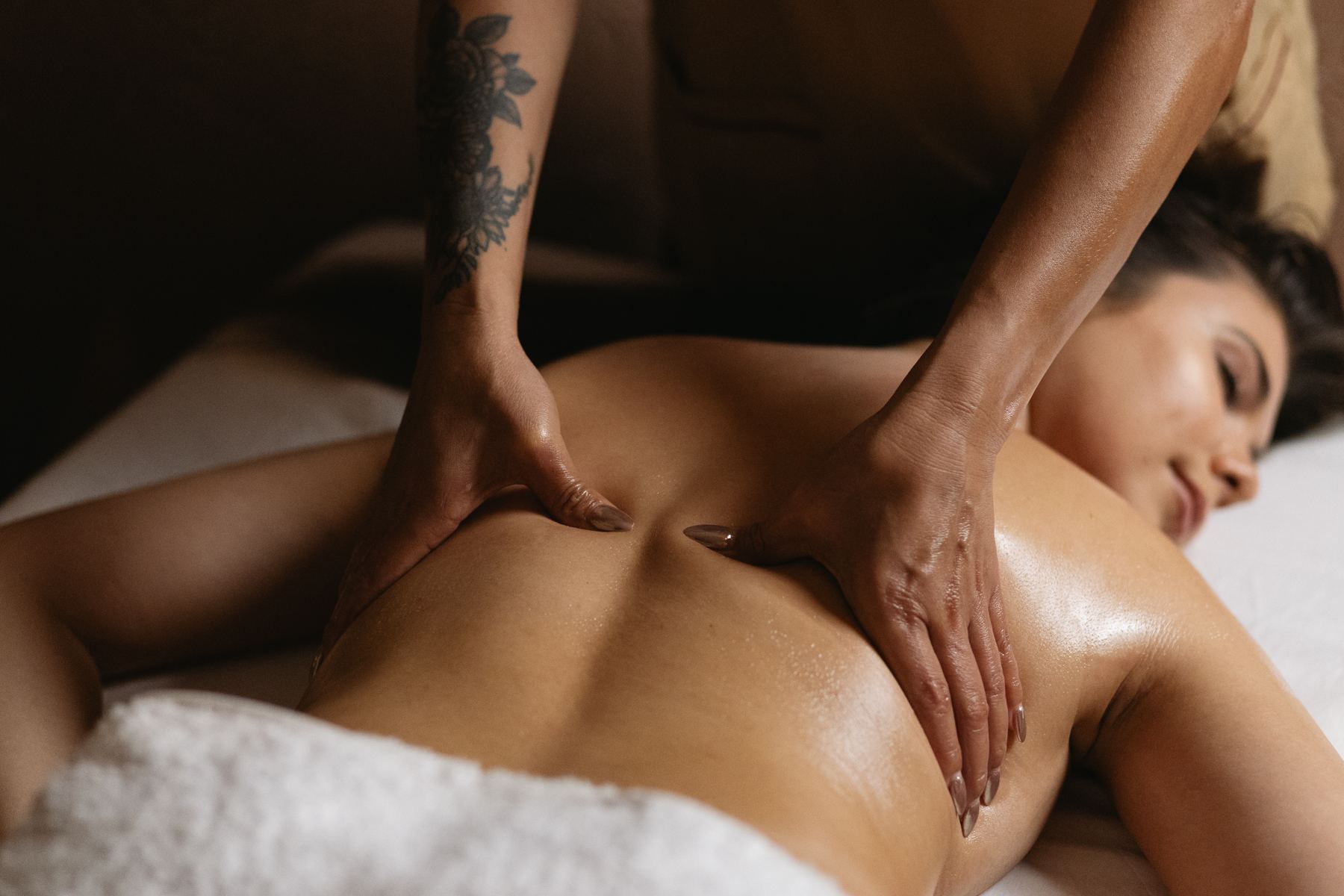
When you lie down on the table today, more than two thousand years of history reach out to touch you. At the ESCAPE salon in Prague's Josefov quarter we work with authentic Thai techniques: stretching, work with pressure points and warming oils. All in the hands of therapists trained in Asia itself.
And on one thing we stay honest: for us, massage is a path to relaxation, comfort and calm, not a substitute for medical care. Whether you choose a traditional dry Thai massage or prefer something else, you are giving yourself a ritual humankind has refined over a good few thousand years. And that alone is worth experiencing.
Key takeaways
- Massage is older than writing and the wheel. The oldest evidence is more than 4,000 years old.
- It has no single birthplace. It arose independently in Egypt, India, China and the ancient Mediterranean.
- Thai massage was born from the meeting of the Indian and Chinese traditions in Buddhist temples, above all at Wat Pho.
- Shivago Komarpaj is still revered as the "father" of Thai medicine and massage.
- Since 2019 Thai massage has been on the UNESCO list.
- Today massage is mostly wellness, a path to calm, not a substitute for medical care.
Experience living history for yourself
Traditional Thai massage as it has been passed down for centuries — calm, attentive, and from therapists trained in Asia. In the heart of Prague.